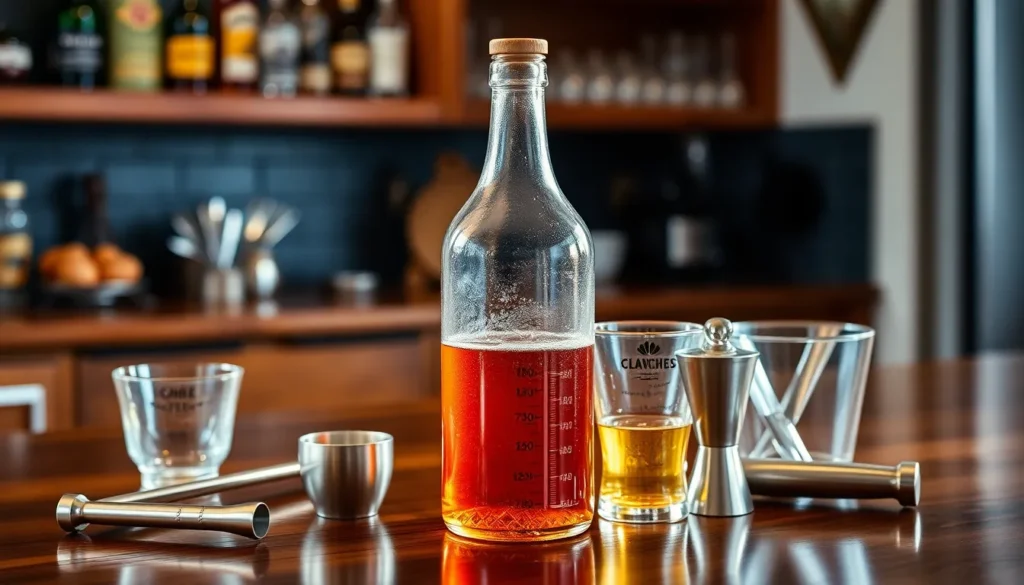
When it comes to measuring liquids, confusion can reign supreme. Ever found yourself staring at a 750 ml bottle, scratching your head and wondering how many ounces are in there? You’re not alone! It’s like trying to solve a riddle that’s been passed down through generations of confused drinkers.
Understanding Measurements
Liquid measurements often create confusion, particularly the difference between milliliters and ounces. Each unit serves a specific purpose in measuring fluid volumes. The liter, for instance, forms the foundation for both milliliters and ounces.
One liter equals 1,000 milliliters, making conversion straightforward. To convert milliliters to ounces, knowing the conversion factor is essential. 750 milliliters equates to approximately 25.36 ounces. This value provides clarity for those managing drink portions.
Conversion rules apply consistently across various sizes. Understanding these rules makes navigating different measurement systems easier. Tables containing standard conversions help visualize these relationships.
For everyday use, knowing that 1 ounce equals roughly 29.57 milliliters streamlines the conversion process. When measuring liquids, accuracy is crucial, whether preparing a recipe or serving beverages. An established comparison between milliliters and ounces enhances comprehension.
Recipes often call for specific measurements. Adapting them requires a clear understanding of these units. Converting efficiently prevents miscalculations in both cooking and mixing drinks.
In instances where precision is crucial, use of tools like liquid measuring cups can enhance accuracy. Familiarity with conversion ratios supports clear communication while helping avoid frustrations. Ultimately, mastering these measurements simplifies everyday tasks, making it easier to enjoy the beverages one prefers.
Converting Milliliters to Ounces
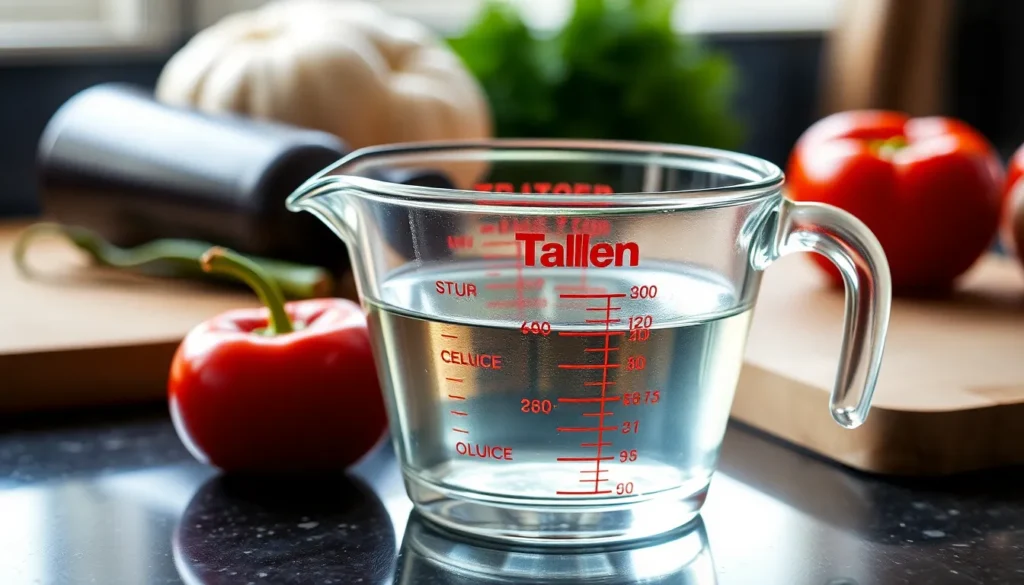
Understanding how to convert milliliters to ounces aids in accurately measuring liquids. This knowledge proves invaluable, especially in cooking and serving beverages.
The Conversion Formula
The conversion formula simplifies the process. To convert milliliters to ounces, multiply the milliliters by 0.033814. For instance, 750 milliliters multiplied by 0.033814 equals approximately 25.36 ounces. Keeping this conversion factor in mind can greatly enhance measurement accuracy.
Examples of Conversion
Several everyday scenarios illustrate this conversion. A 500 ml bottle translates to about 16.91 ounces. Smaller measurements also fit into this framework: 100 ml is equivalent to roughly 3.38 ounces. This clarity in conversion minimizes confusion when handling different liquid measurements. Having quick reference points helps both novice cooks and seasoned mixologists alike.
Importance of Accurate Measurements
Accurate measurements are essential in cooking and mixology. Recipes depend on precise liquid quantities for the best results. When converting measurements, knowing that 750 ml equals approximately 25.36 ounces simplifies portion control. Each measurement needs clarity, especially when handling various sizes of bottles or mixing different liquids.
Understanding the conversion formula enhances accuracy. To convert milliliters to ounces, multiply the milliliters by 0.033814. For example, a 500 ml bottle equals about 16.91 ounces. Similarly, 100 ml translates to roughly 3.38 ounces. These examples clarify the conversion process, helping individuals avoid unnecessary errors.
Using the right measuring tools further supports accurate measurements. Liquid measuring cups provide the precision needed for successful cooking or mixing. Each tool aids in achieving desired flavors and dilutions, particularly in cocktails where balance is crucial.
Familiarity with common conversions benefits everyone’s daily life. Knowing that 1 ounce equates to approximately 29.57 milliliters offers convenience. These small adjustments can significantly impact the outcome of a dish or drink and enhance overall enjoyment.
Mastering these essential measurements not only improves efficiency but also builds confidence in the kitchen or bar. A clear understanding allows for creativity in mixing and cooking, empowering individuals to experiment with various recipes. Accurate measurements lead to a consistently delightful experience, ensuring satisfaction with every sip or bite.
Common Uses for 750 ml
Numerous beverages come in 750 ml bottles, making this size a popular choice. Wine typically fills bottles of this volume, often referred to as a standard bottle. Spirits, such as vodka and whiskey, also frequently appear in 750 ml options, allowing for easy portion control.
In the culinary world, 750 ml is an ideal size for recipes requiring precise liquid measurements. Many cocktails, like a classic margarita, use ingredients measured in this quantity, ensuring balanced flavors. Home bartenders benefit from having a 750 ml bottle on hand, providing ample liquid for several servings.
Craft beer is another beverage commonly sold in 750 ml containers. Limited edition releases from breweries often come in this volume. Sharing a 750 ml bottle of craft beer among friends encourages a social experience.
For non-alcoholic options, flavored syrups for beverages often use the 750 ml metric. Coffee shops frequently stock these syrups to create popular drinks. Smoothies and juices also utilize 750 ml bottles, allowing consumers to enjoy large single servings.
Measuring liquid ingredients in cooking is easier when using 750 ml as a standard reference. Recipes that call for 750 ml simplify shopping, making it straightforward to select the correct amount. This volume proves useful in meal prep, providing a clear gauge for portioning ingredients.
Understanding the common uses of 750 ml adds clarity to fluid measurements, benefiting drinkers and cooks alike. Keeping this volume in mind enhances accuracy and portion control in both casual and formal settings.
Understanding liquid measurements is crucial for anyone dealing with beverages or recipes. The conversion of 750 ml to approximately 25.36 ounces simplifies portion control and enhances the overall experience. Familiarity with these measurements not only aids in cooking and bartending but also builds confidence in managing liquids effectively.
With tools like conversion tables and measuring cups, accuracy becomes second nature. This knowledge empowers individuals to explore their culinary and mixology creativity while ensuring satisfaction with every drink or dish. Embracing these essential conversions leads to a more enjoyable and efficient experience in the kitchen or bar.