
Ever found yourself staring at a mountain of empty aluminum cans, wondering if you’ve just conquered a recycling Everest? You’re not alone! Many people have that same burning question: how many aluminum cans make a pound? Spoiler alert: it’s more than you might think, but less than your recycling bin could handle!
Understanding Aluminum Cans
Aluminum cans are ubiquitous in daily life and play a crucial role in waste management. It’s essential to understand their composition and the recycling benefits they offer.
What Are Aluminum Cans Made Of?
Aluminum cans consist primarily of aluminum alloy. This alloy typically contains around 90% aluminum, along with other metals like manganese and magnesium that improve strength and durability. The lightweight nature of aluminum makes it a preferred choice for beverage containers. Each can, about 0.48 ounces on average, adds up significantly when recycling. Manufacturers prioritize using materials that are both efficient and environmentally friendly, which makes this metal highly recyclable.
The Importance of Recycling Aluminum Cans
Recycling aluminum cans significantly reduces energy consumption. It requires 95% less energy to recycle aluminum compared to producing new aluminum from raw materials. This process not only conserves natural resources but also lessens greenhouse gas emissions. Additionally, recycling helps reduce landfill waste, with over 1 billion cans discarded daily in the U.S. Alone. Collecting and recycling cans creates jobs, supports local economies, and promotes sustainable practices. Supporting aluminum recycling initiatives fosters a healthier planet for future generations.
Weighing Aluminum Cans
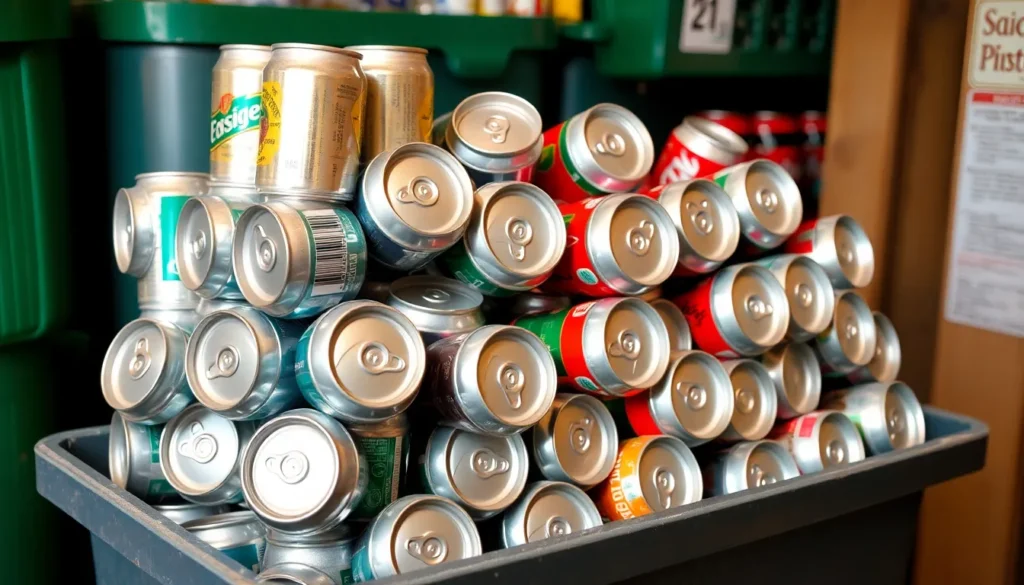
Understanding the weight of aluminum cans helps in determining how many are needed to reach a pound. Gaining insight into this topic can simplify recycling efforts.
Average Weight of an Aluminum Can
An average empty aluminum can weighs about 0.5 ounces. This lightweight design ensures that consumers can easily handle and transport multiple cans. Most commonly, 12-ounce beverage cans represent the standard size, contributing to the can’s lightweight attribute. Variations exist, with some larger cans weighing slightly more but remaining within a similar range. Cans made from aluminum alloy consist of approximately 90% aluminum, providing the strength necessary for containing beverages while keeping the weight manageable.
Calculation of Cans Per Pound
A simple calculation reveals that it takes around 32 empty aluminum cans to make one pound. Multiplying the weight of a single can by the total number needed reveals the efficient use of space in recycling bins. An abundant number of cans makes recycling accessible for households. Those participating in recycling programs can easily store and transport this quantity of cans. Knowing that recycling aluminum saves significant energy, the process becomes even more worthwhile for individuals committed to sustainability.
Factors Affecting Can Weight
Understanding the factors that affect aluminum can weight is crucial for accurate recycling and sustainability. Several elements contribute to the overall weight of a can.
Can Size and Design
Can size and design play a significant role in weight variations. Standard 12-ounce cans weigh about 0.5 ounces. Larger cans, such as 16-ounce or 24-ounce versions, will be heavier due to increased volume and material use. Furthermore, design features like unique shapes or added strengthening ribs also impact weight. For example, a sleek, tall can may weigh less than a wider one while holding the same volume. Collectively, these design differences influence how many cans make a pound.
Impact of Can Manufacturing Variations
Can manufacturing variations lead to differences in weight. Differences in the aluminum alloy’s composition affect the can’s strength and weight. Notably, the production process may yield cans with slight weight discrepancies, even within the same brand. Typically, manufacturers aim for consistency, but slight deviations can arise. Recyclers need to account for these variations when calculating the number of cans per pound. Ultimately, these factors contribute to the overall understanding of aluminum can weight and its implications for recycling efforts.
Environmental Impact of Recycling Aluminum
Recycling aluminum has a profound effect on the environment. It conserves energy and reduces waste, making it a simple yet powerful practice.
Benefits of Recycling Aluminum Cans
Recycling aluminum cans saves 95% of the energy needed to create new aluminum. This energy efficiency results in lower greenhouse gas emissions. By recycling, approximately 1 metric ton of carbon dioxide emissions are avoided for every ton of aluminum recycled. Additionally, recycling aluminum promotes resource conservation, limiting the need for raw materials. Jobs are created within the recycling industry, supporting local economies and sustainable practices.
How Recycling Rates Influence Demand
Recycling rates directly impact the demand for recycled aluminum. High recycling rates lead to increased availability of recycled materials, reducing reliance on new aluminum production. As more aluminum is recycled, manufacturers shift towards using these recycled materials instead of virgin resources. Increased demand for recycled aluminum assists in stabilizing prices and promoting market growth. Higher recycling rates also contribute to improved environmental conditions by decreasing the carbon footprint associated with aluminum production.
Understanding how many aluminum cans make a pound offers valuable insight into recycling practices. With approximately 32 empty cans weighing in at a pound it’s clear that households can efficiently manage their recycling efforts. The lightweight nature of aluminum not only makes it a popular choice for beverages but also simplifies the recycling process.
As communities strive for sustainability the significance of recycling aluminum cans cannot be overstated. It conserves energy reduces waste and supports local economies. By participating in recycling programs individuals contribute to a healthier planet while also benefiting from the economic advantages of a robust recycling industry. Embracing these practices leads to a more sustainable future for everyone.